
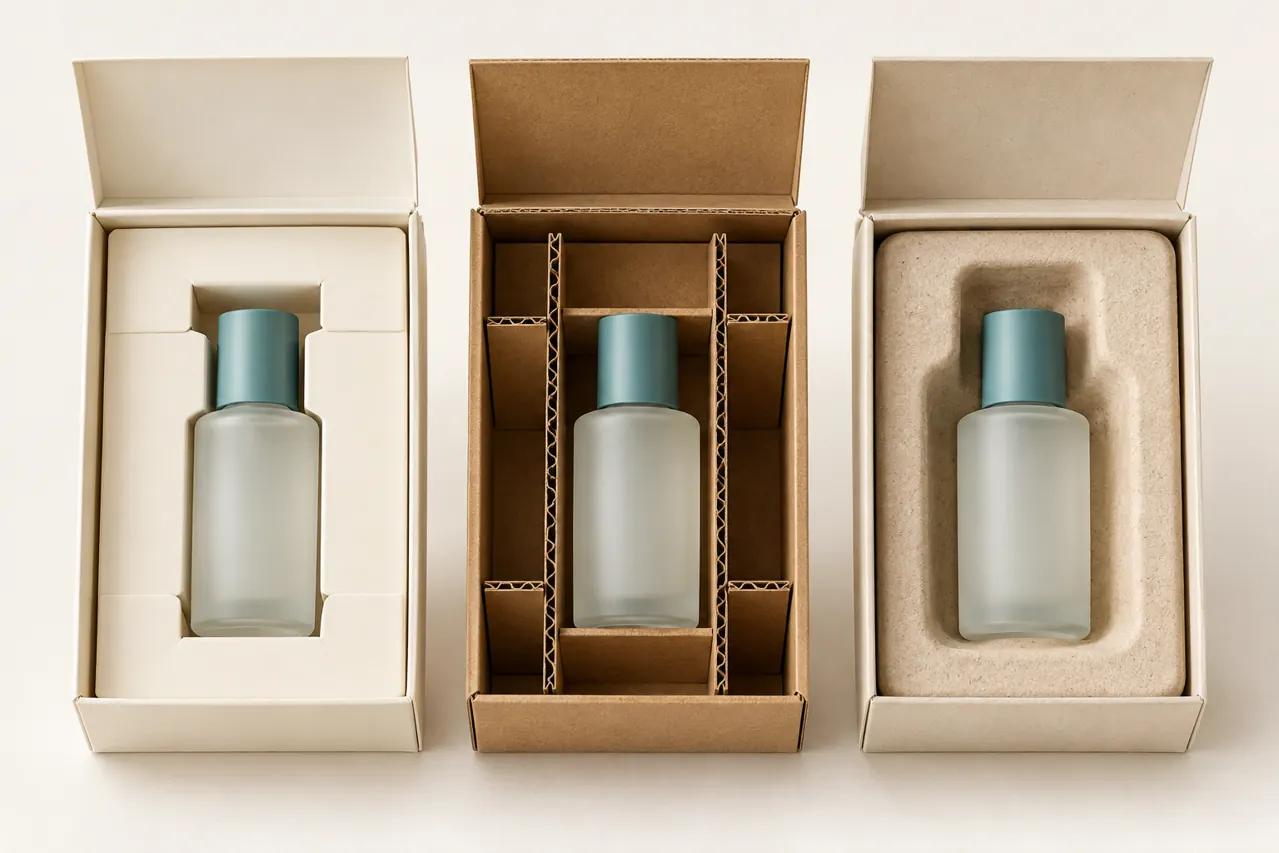
A good-looking sample is only the start. Before production, check the complete product, the pack and the approval record. A clear reference makes the next decision easier.
Know what the sample proves
| Review tool | Useful for | Still to confirm |
|---|---|---|
| Plain sample | Fit and assembly | Print and finishes |
| Digital proof | Content and layout | Physical appearance |
| Decorated sample | Presentation | Whether it represents production |
Ask how the sample was made. If its material or finishing process differs from the proposed production run, record the difference. Approve each decision on suitable evidence.
Choose the sampling process
A physical digital printed sample is different from an electronic artwork proof. Digital printed samples are generally less expensive than production-press samples and can help check layout and assembly. Ask whether the material and finishes match the planned run.
Production-press samples generally require more setup, time and cost. For small orders, use them when a critical production feature justifies the expense. A sample can be mailed by agreement; confirm sampling, special-finishing and courier charges first.
Try the real product
Use the product with its cap, label, sleeve and accessories. Pack it in the intended order. Check that the insert holds the contents, the closure works and the product can be removed without tearing the pack.
Have a member of the packing team assemble it. Record any step that needs force, extra tape or a special technique. A prototype assembled slowly by a designer may not reveal a practical packing problem.
Check the details
- Fit: product version, dimensions and clearance.
- Print: spelling, panel orientation and artwork revision.
- Finish: foil, coating and edges near folds or glued areas.
- Assembly: closure, insert locking and packing sequence.
- Approval: sample version, approver and open conditions.
Use an agreed physical colour reference. A phone photograph or screen display is useful for discussion, but it is a weak final colour reference. Check the finished combination where a coating changes the appearance.
Presentation is not protection
For parcel delivery, review the complete shipping pack. Include the outer carton, cushioning and closure. An informal shake check is not transport certification. ISTA recommends selecting tests around the distribution environment and using representative product and packaging samples.
Make comments specific
Instead of “make it better,” write: “The lid catches on the bottle cap during removal. Please review clearance and provide a revised sample.” Attach a marked photograph and the sample version.
Retain the approved sample with the specification. If the material, artwork or structure changes later, identify which checks must be repeated. One approved sample is a reference, not a guarantee that every production unit will be identical.
Prepare artwork · Explore inserts
Read the overseas packaging ordering guide
Plan the next step
Send product photos, dimensions, quantities and the delivery destination. Discuss the packaging with HuaJia.
Pingback: How to Reduce Custom Packaging Cost | HuaJia
Pingback: Packaging Reorder Checklist | HuaJia
Pingback: Custom Packaging for Gift Shops: Overseas Bulk Orders | HuaJia
Pingback: Candle Packaging That Protects and Sells - HuaJia Printing Factory China | Professional Custom Packaging Solutions
Pingback: How to Order Custom Packaging from Overseas - HuaJia Printing Factory China | Professional Custom Packaging Solutions
Pingback: Skincare Packaging: Start Small, Scale Up - HuaJia Printing Factory China | Professional Custom Packaging Solutions