
Custom paper packaging

The right structure.
The right finish.

Explore common box styles and surface treatments. Build a packaging brief around the product, the presentation and the way it will be packed.

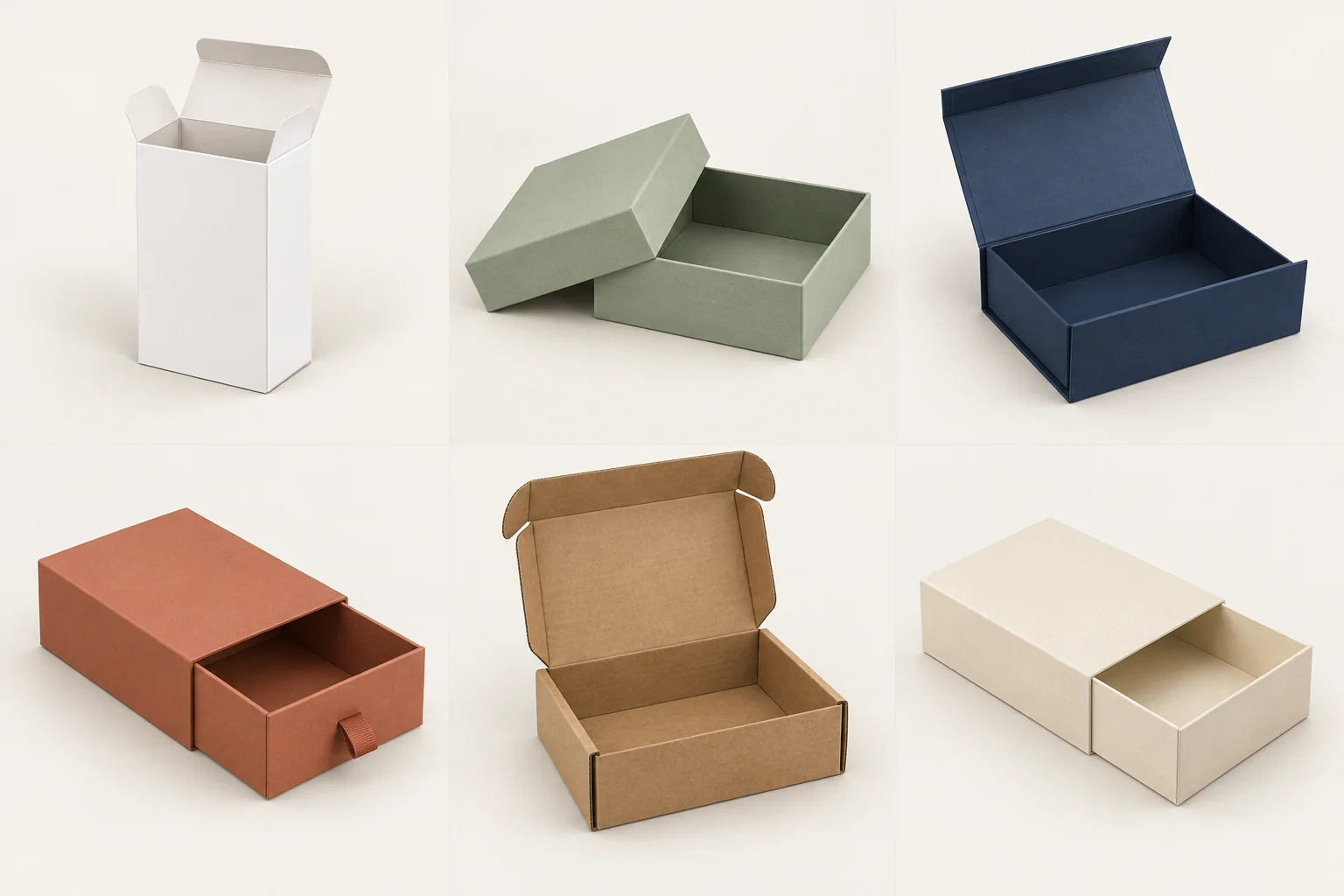
Concept illustrations of six common packaging structures: folding carton, lid and base, magnetic closure, drawer, mailer and sleeve with tray
Illustrated structures for reference. Final dimensions and details are developed for each project.

01 / Box styles

Start with the structure.

Choose an opening style and a delivery format first. Materials, inserts and artwork can then be matched to the brief.

Concept illustration of folding cartons

01

Folding cartons

Paperboard cartons with tuck flaps. A practical starting point for printed retail packaging.

Common applicationsCompact retail products, cosmetics and small accessories.

Key specificationBoard grade, product fit and carton assembly.
Explore folding cartons →

Concept illustration of lid & base boxes

02

Lid & base boxes

A separate lid and base create a simple presentation box with a substantial feel.

Common applicationsGift sets and presentation packaging.

Key specificationLid fit, insert design and assembled storage volume.

Explore rigid box options →

Concept illustration of magnetic closure boxes

03

Magnetic closure boxes

A hinged lid creates a book-style opening with a magnetic closing flap.

Common applicationsPresentation sets and premium brand packaging.

Key specificationClosure alignment, packing method and delivery format.

Explore rigid box options →

Concept illustration of drawer boxes

04

Drawer boxes

A sliding tray sits inside an outer sleeve for a controlled reveal of the contents.

Common applicationsJewellery, accessories and smaller gift sets.

Key specificationTray clearance, pull detail and product retention.

Explore rigid box options →

Concept illustration of corrugated mailer boxes

05

Corrugated mailer boxes

A hinged corrugated structure combines an opening experience with a parcel-ready format.

Common applicationsE-commerce orders and subscription packs.

Key specificationBoard specification and testing for the actual delivery route.

Explore corrugated mailer boxes →

Concept illustration of sleeve & tray boxes

06

Sleeve & tray boxes

A printed sleeve surrounds a tray to organise the product and create a sliding opening.

Common applicationsRetail kits and coordinated product sets.

Key specificationSleeve fit, tray depth and assembly sequence.

Explore sleeve & tray boxes →

Packaging examples show common structures. The quotation and approved physical sample define the final specification.

Complete the pack

Custom packaging inserts

Plan the product fit, internal layout and packing sequence alongside the box. Compare paperboard dividers, corrugated supports and project-specific insert options.

A useful insert brief includes every product and accessory, contact surfaces, removal access and the required box dimensions.

Explore custom packaging inserts →

02 / Surface & detail

Give the design its finish.

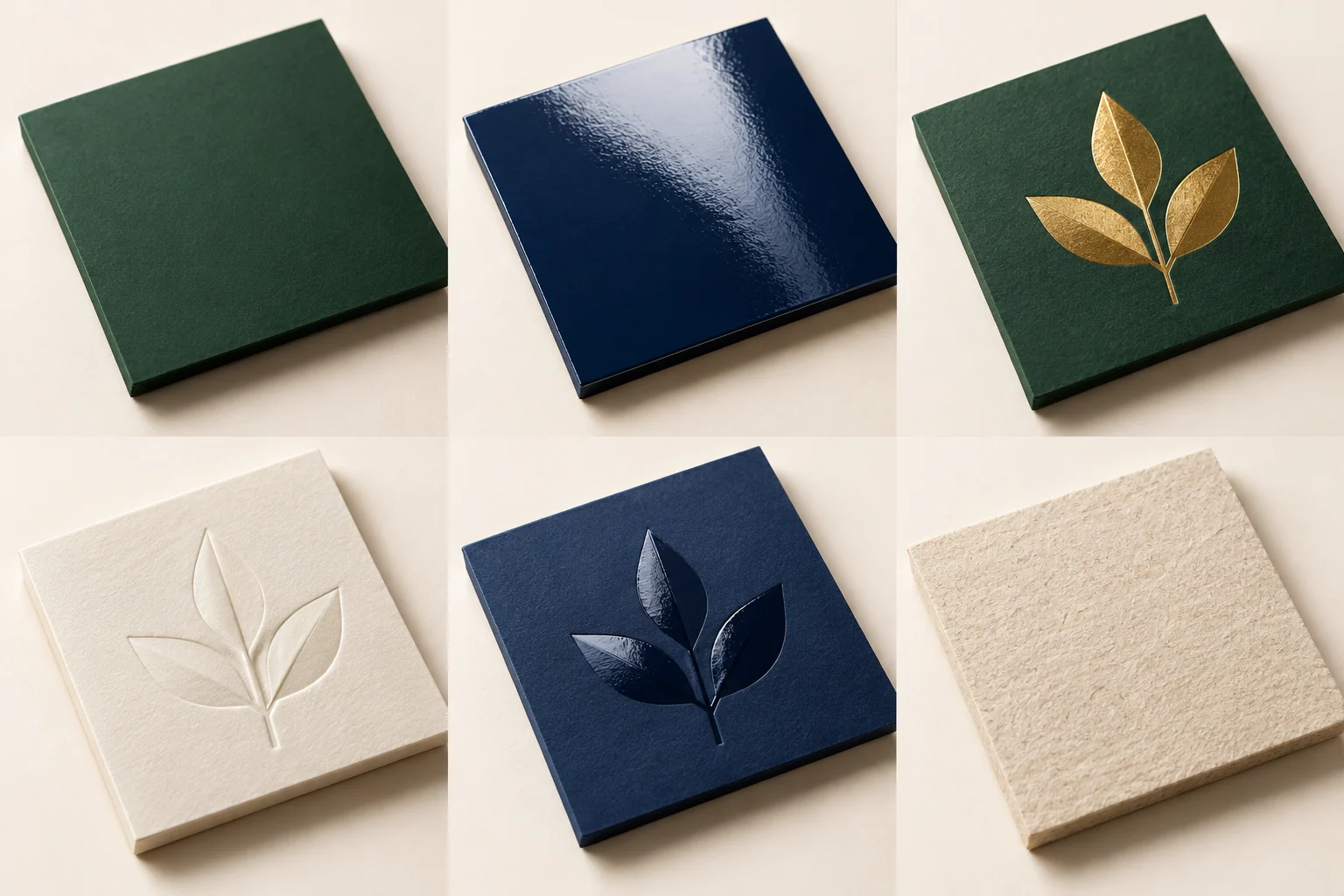
Compare texture, reflection and detail. Confirm the chosen effect on the actual paper and artwork before production.

Concept illustration of matte lamination

Matte lamination

A low-reflection surface for a calm, understated presentation. Check handling marks on dark artwork.

Concept illustration of gloss lamination

Gloss lamination

A reflective surface that changes how colour and artwork catch the light. Compare a printed sample.

Concept illustration of foil stamping

Foil stamping

Metallic accents highlight selected design details. Confirm foil colour, placement and fine-line reproduction.

Concept illustration of embossing & debossing

Embossing & debossing

Raised or recessed details add a tactile dimension. Confirm the depth and clarity on the selected paper.

Concept illustration of spot uv

Spot UV

A selective glossy coating creates contrast against surrounding areas. Check registration against the printed design.

Concept illustration of textured paper

Textured paper

A material choice that brings texture to the surface. Review printing and finishing on the proposed stock.

Finishing examples show visual effects. Availability and suitable combinations depend on the material and project specification. Learn about paperboard decoration.

03 / Inside the box

Fit matters as much
as appearance.

A good brief covers the product, its accessories and the packing method. An insert can organise the contents, but the complete pack still needs a physical fit check.

Read the folding carton vs rigid box guide →

  • Product dimensions & weight
    Include every item that will go inside the pack.
  • Insert & internal layout
    Discuss paperboard, moulded or other suitable inserts for the actual product.
  • Artwork & printed components
    Include sleeves, labels, manuals and information cards in the brief.
  • Delivery & packing format
    Confirm flat or assembled delivery and the outer shipping carton.

04 / From brief to approval

A clearer path to a finished pack.

01

Share the brief

Product dimensions, quantities, reference images and destination.

02

Compare the specification

Structure, material, finish, inserts and the delivery basis.

03

Review a sample

Check product fit, artwork and the complete packing sequence.

04

Approve the details

Confirm the final specification and schedule before production.

Have a product in mind?

Send its dimensions, the required quantity and a reference image. HuaJia can discuss the packaging brief and the next steps.

Send a packaging enquiry →