
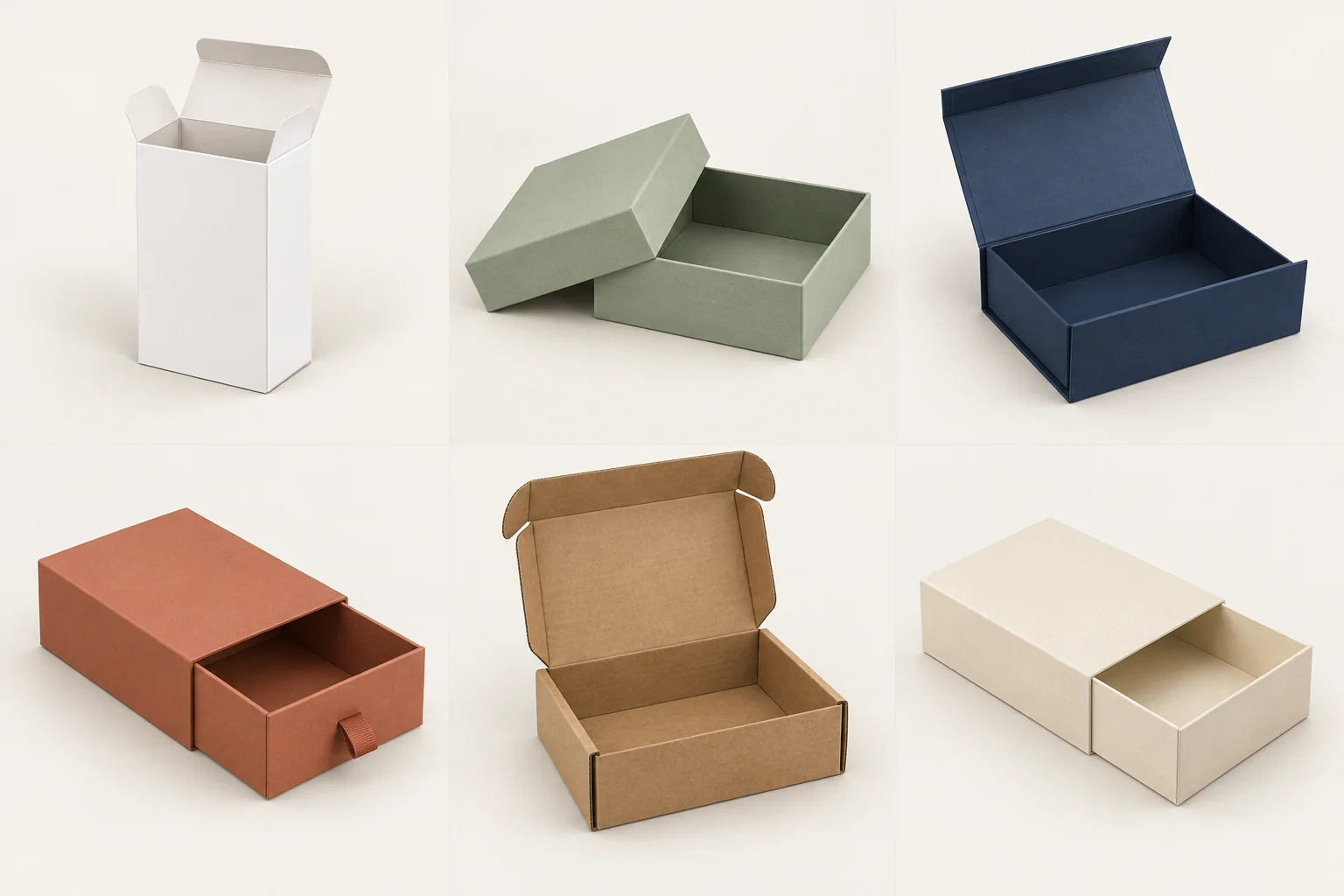
Choose the structure that suits the product, presentation and complete delivered cost. Folding cartons and rigid boxes serve different needs, and either can work well when properly specified.
Folding cartons
Cut and creased paperboard can be supplied flat and assembled during packing. This can reduce empty-pack storage and shipment volume. Confirm the proposed board, closure, finish and assembly method.
Rigid gift boxes
A conventional rigid box holds its assembled shape and can suit gift presentation. Its shipping and storage volume may be higher. Some collapsible designs are supplied flat, so confirm the actual delivery format.
Compare the whole operation
Ask for quotations using the same product, quantity and presentation brief. Include inserts, tooling, samples, freight and packing labour. A more elaborate box should have a clear purpose, such as organising a gift set or creating a particular opening experience.
Try the actual product
Check fit, clearance, removal and contact with decorated surfaces. Include accessories and printed cards. For online orders, review the outer shipping pack as well; a presentation box is not automatically a parcel-protection system.
Check assembly before buying
Have the packing team fill and close a sample. Record tools, adhesive and handling steps. A flat carton may save space while adding assembly work. An assembled box may simplify filling while needing more storage.
Make a practical choice
For an everyday retail product, compare a straightforward folding carton first. For a gift set, compare how each structure arranges and reveals the contents. Choose based on the approved sample and quotation rather than the structure name alone.
Pingback: How to Compare Custom Packaging Quotes: A Practical Buyer’s Checklist - HuaJia Printing Factory China | Professional Custom Packaging Solutions