
Choosing paperboard for a folding carton starts with the product, the box structure and the surface you want customers to see. A quotation that only says “350 gsm white card” leaves important questions unanswered. Two boards with the same weight can behave differently when folded, printed and loaded.
This guide compares SBS, FBB and kraft paperboard for packaging, then shows what to specify before approving a sample. It is intended for retail cartons; corrugated shipping boxes and the greyboard core of rigid boxes are different material systems.
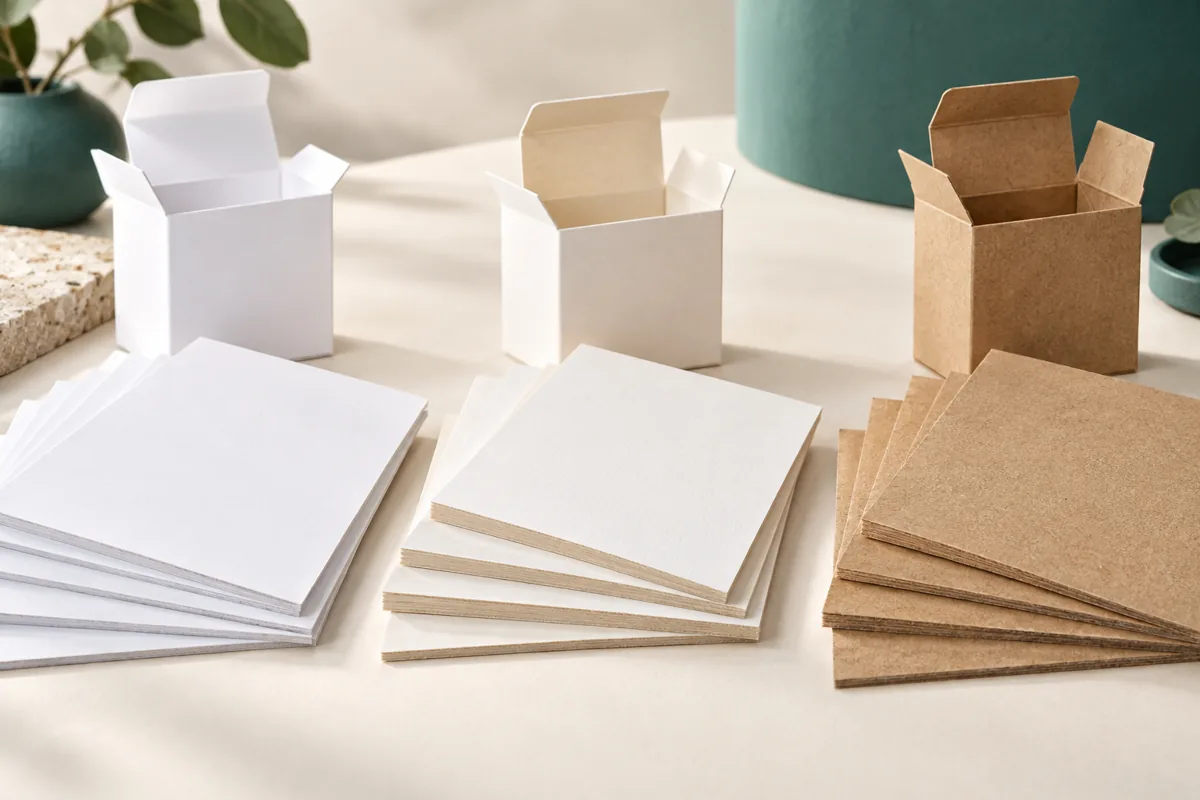
SBS vs FBB vs kraft: a practical comparison
| Option | What to establish | When to evaluate it | Sample checks |
|---|---|---|---|
| SBS / SBB | Bleached chemical-pulp board; confirm coating on each side. | Cartons where a white interior and controlled print surface matter. | Inside appearance, fold edges, solid colours and surface finish. |
| FBB | Layered board with a mechanical-pulp middle; back colour varies by grade. | Projects comparing stiffness, weight and print performance. | Actual caliper, panel rigidity, back shade and tuck closure. |
| Kraft paperboard | A broad commercial description; request the exact grade, fibre composition and coating. | Designs that intentionally use a brown or natural-looking surface. | Colour appearance on the real stock, white ink needs and visible fibre variation. |
SBS means solid bleached sulphate; SBB means solid bleached board. FBB means folding box board. These names help describe material families, but do not replace a grade specification. Holmen distinguishes white-back and cream-back FBB, for example. “Kraft” alone does not establish recycled content, print quality or suitability for your product.
GSM is weight; caliper is thickness
GSM expresses grams per square metre. Caliper is the measured thickness, usually quoted in micrometres or millimetres. Neither figure alone tells you whether an assembled box will protect a particular product.
For a useful comparison, ask each supplier for the board name, nominal gsm, nominal thickness and the relevant technical data sheet. Put the values next to the proposed box dimensions. A tall narrow carton and a wide shallow carton can need different structural support even when they hold the same mass.
Use this purchasing rule: if one quote changes the board grade, treat it as a material alternative that requires a new sample approval. Do not label two offers equivalent just because their gsm matches. If a supplier quotes “points,” ask for the thickness in millimetres as well, so the units are explicit.
Start with the product and loading method
List the product’s filled weight, dimensions, vulnerable surfaces and how it enters the carton. Include caps, pumps, sleeves and protective wrapping. A glass jar resting on the base presents a different problem from a lightweight tube suspended in an insert.
- Support the load. Ask where the product’s weight is carried: a glued base, locking bottom, insert or another component.
- Check the opening. Confirm that the operator can insert the item without scraping the label or forcing the side panels outward.
- Check the display. Assess whether broad panels bow and whether the carton stands as intended.
- Define the journey. State whether the carton goes inside an outer shipping box. A retail carton should not automatically be treated as a parcel shipper.
If the product moves inside an otherwise attractive carton, evaluate a custom packaging insert before increasing the board weight. Reducing movement and supporting the product can address a different failure mechanism from making the outer panels thicker.
Approve printing on the intended surface
A white paper proof cannot show how a design will look on brown stock. When comparing kraft with a white board, ask for the same critical artwork area on each candidate material. Include the brand colour, small text, a photograph if used, and any white elements.
Record whether the design uses the stock colour as part of the image or needs an opaque white printing layer. Ask the printer to identify which white areas are unprinted paper and which are printed white. This is particularly useful for logos and barcodes.
For coated boards, confirm which side is printed and which side faces inside. An unprinted interior can be a deliberate design choice, but a cream or brown back should be approved before production. Use the packaging artwork checklist to release the artwork after the material and dieline are agreed.
Test folds, finishes and assembly together
Evaluate a folded sample made with the proposed board and structure. Open and close the tuck, inspect the crease under ordinary viewing conditions, and load the real product. Note resistance, cracking, loose closures and difficulty assembling the base.
If the design includes foil, embossing or spot UV, identify those areas in the sample request. A plain white mock-up can confirm fit and assembly, but it does not approve the final surface treatment. Keep the approved structural sample and approved decorated sample identified by revision.
When a fold cracks, record the position, material grade and artwork coverage before requesting a change. The board, grain orientation, crease design and finish should be reviewed together; increasing gsm without investigating may simply create a different folding problem.
A material specification you can send with your enquiry
Copy and complete the following brief for a custom folding carton:
- Product: dimensions, filled weight, quantity per carton and loading direction.
- Structure: approved dieline revision, internal dimensions and closure style.
- Material: proposed grade, gsm, caliper, coating sides and inside colour.
- Appearance: print sides, reference colours and finish locations.
- Approval: fit sample, printed sample and the defects that would prevent acceptance.
- Supply: order quantity, delivery destination and whether board substitution requires written approval.
Ask the supplier to flag any unavailable grade before sampling. A named alternative with a data sheet is easier to evaluate than an unexplained “equivalent white card.” Keep the agreed material in the purchase specification for reorders.
Frequently asked questions
Is FBB always cheaper than SBS?
No universal price order applies. Compare the actual grade, required quantity, sheet layout, finishing and delivered cost. Assess whether an alternative meets the same appearance and assembly requirements before comparing savings.
Does brown kraft prove that packaging is recycled?
No. Appearance alone does not establish fibre composition. Request a documented material specification before making a recycled-content claim.
Can I choose the board before the box dimensions?
You can shortlist materials, but approve the grade with the final structure and real product. A change in panel size, base or insert can change the decision.
Technical references
Material terminology and measurements: Holmen general technical information; an example of FBB construction: Holmen Incada; SBS and SBB product terminology: Sappi paperboard. These references explain material families; they do not identify the board supplied for a HuaJia order.
Send HuaJia your product dimensions, weight and artwork needs to discuss a material and sample brief.